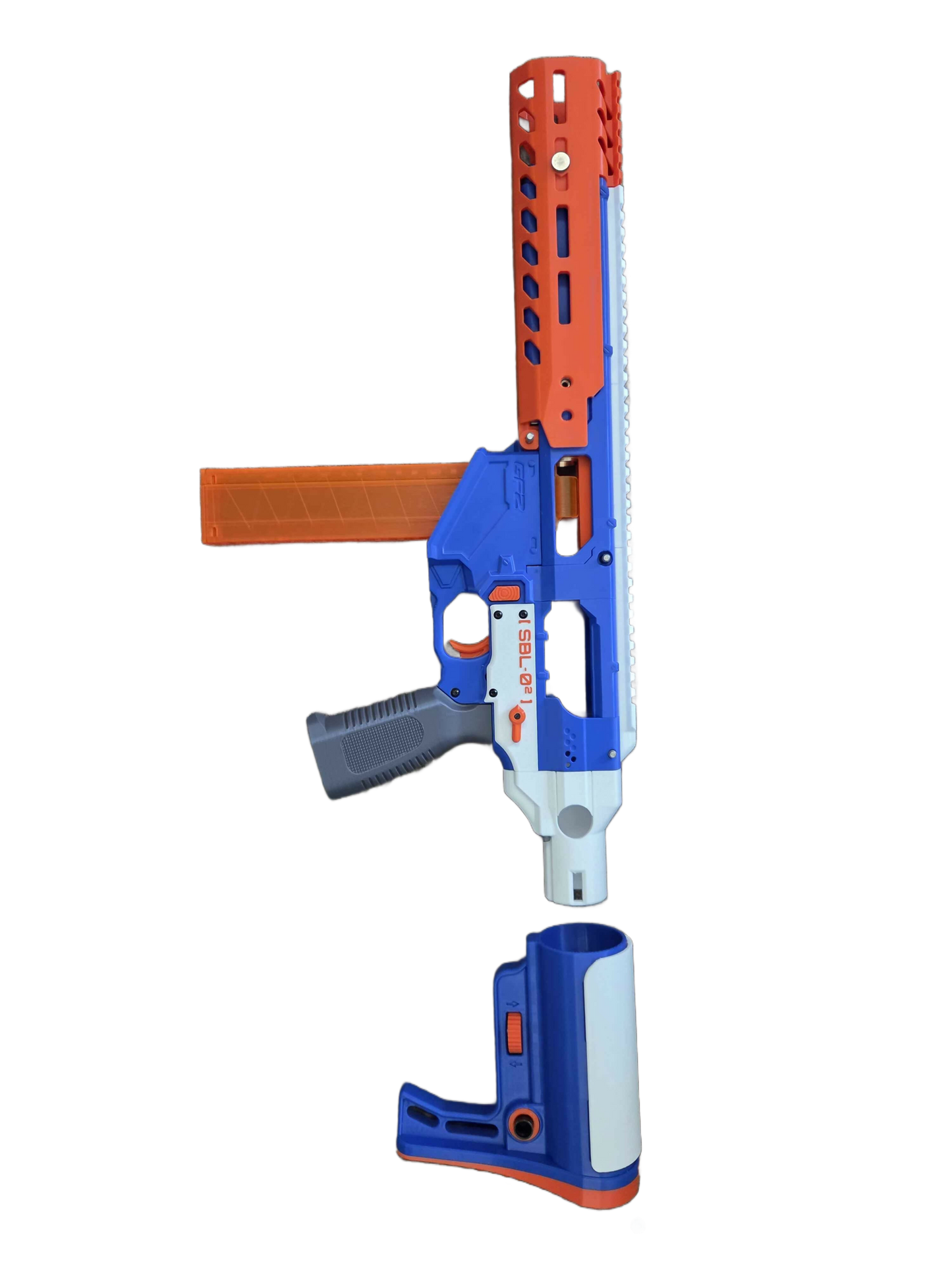
Sham SKU: 40.050
SBL O2 HPA Build Kit
SBL O2 HPA Build Kit
In Stock — 13 available
- after this kit you still need
-HPA engine or core (your choice)
-Air bottle
-Barrel
- Your own printed parts
This is an advanced kit and requires some knowledge of HPA NERF to build.
Kit includes:
- Typical "hardware kit" (bolts/nuts/heatserts/springs/screws, wiring, plugs, switches, etc)
- "Narfshot" micro-controller board, (designed & manufactured by Airzone, specifically for the O²)
- Air fittings, genuine brand-name solenoid valve and low pressure regulator
- STL files for the complete blaster, including the O²-exclusive handguard (pcp), mini upper receiver (w/matching rattler handguard), EX front block/picatinny rail extensions (making the O² compatible with all SBL2/SBL2-EX handguards) and the MFT-esque bottle-stock
- 3mf file so you can plan your blaster colour scheme
- Barrels are not included with the kit, as users will select those based on their core (and thus receiver) of choice, also taking into consideration the length of whichever handguard design you intend to use. The standard O² upper receiver suits a >21cm barrel & the mini upper receiver suits a >12cm barrel
- Uses the same LiPo battery as the Dianna (4s 650mah)
All of the pneumatic components included in the build kit were selected based foremost on their function, their size and (lastly) their cost effectiveness; these components were a strict requirement to build an O², as other fittings, regulators or solenoids proved to not be (reliably) compatible with the blaster. Any substitution of these components could not just worsen the performance and consistency of the O² but also negate a variety of the amazing features inherent to the design, further detracting from the user experience.