


SIDDAMENT X N3D SKU: 9.061
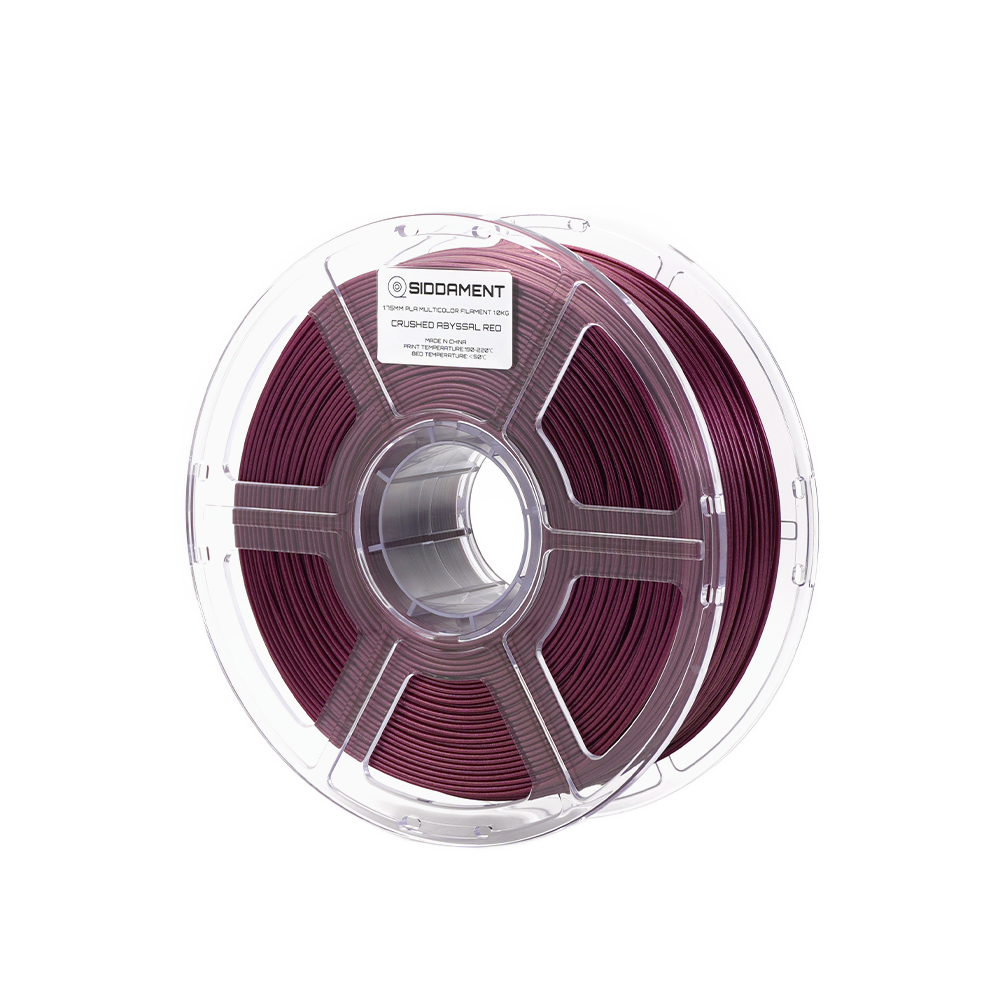
Crushed Abyssal Red PLA
Crushed Abyssal Red PLA
In production Minimum 25 days from the day it ships from China.
Regular price
$27.99 AUD
Regular price
Sale price
$27.99 AUD
Unit price
per
Tax included.
Shipping calculated at checkout.
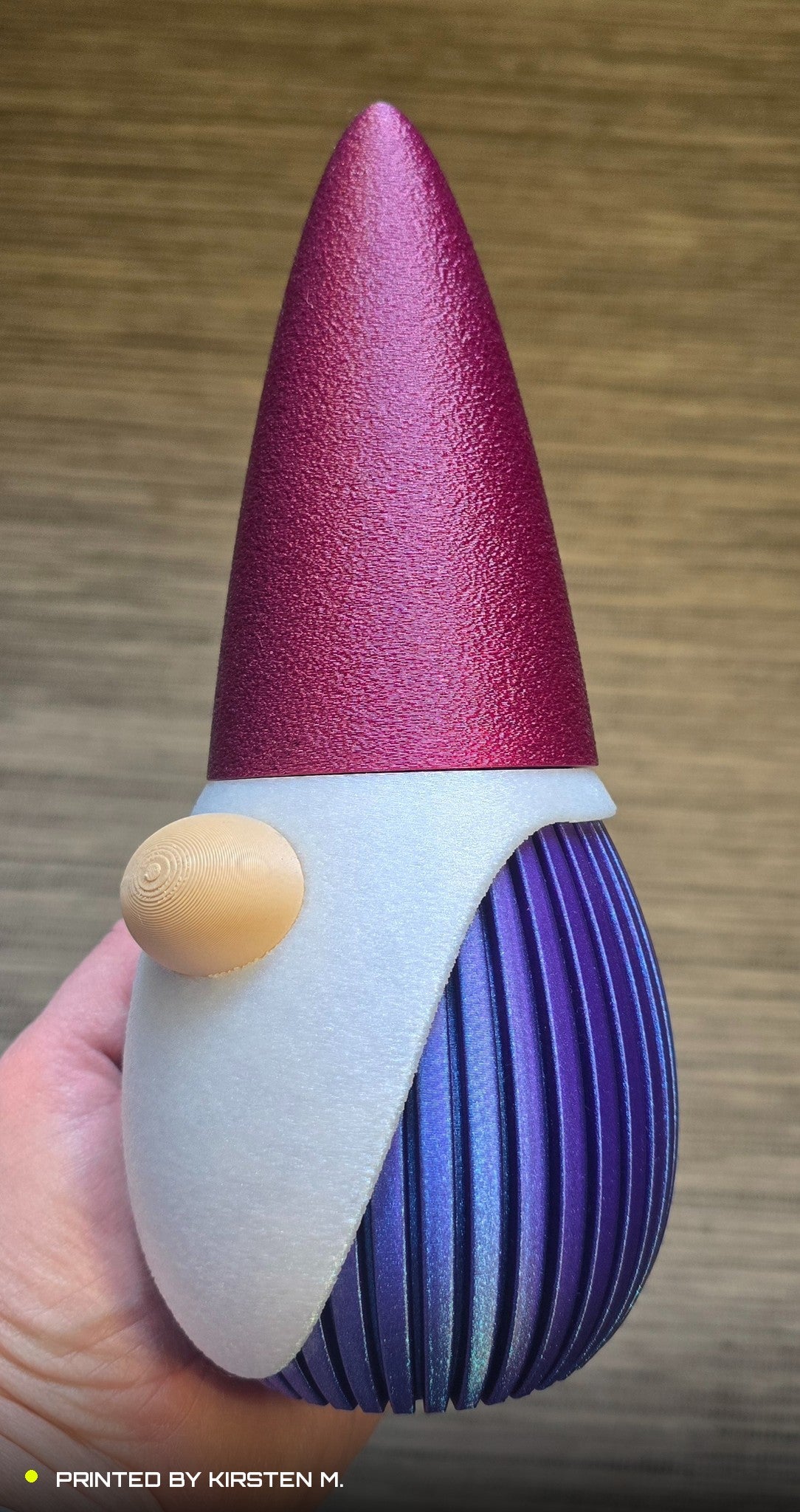
A high-quality filament that replicates the look of metal in your 3D prints. Achieve stunning metallic finishes for a realistic appearance. Perfect for creating metallic prototypes, jewelry, and decorative objects. Experience excellent printability and ease of use.
With a burnt like titanium finish, give your parts a metallic look.
Print Settings
Hotend190-220°C
This temp range may not match what is printed on the spool. With the wide variety of 3D printers and platforms out there, branded machines often print at slightly different temps — some run hotter, some cooler. I have built slicer profiles for the popular printers (see the Slicer Profiles button below); if yours is not covered, use your printer’s generic temp for this material family as a starting point and tune from there. Trust the value here for the most accurate range — the site is updated as I learn from each batch.
Heated Bed60°C
EnclosureNot Required
“Enclosure” = a closed chamber that holds heat — not just walls around your printer. The chamber needs to actually get warm (passively from the bed, or actively heated) so the print stays at a consistent temperature and doesn’t warp or split between layers.
Examples of enclosed printers: Bambu X1C / P1S, Prusa CORE One, Voron 2.4 / Trident, Qidi X-Plus, anything with sealed doors and a hot chamber.
Examples of open printers: Bambu A1 / A1 mini, Prusa MK4 / MINI, Ender 3, most bedslingers. These are fine for PLA / PETG / TPU / PVA but struggle with materials marked “Required” on this row — ABS, ASA, PC, Nylon and similar will warp or delaminate without a hot chamber.
Examples of enclosed printers: Bambu X1C / P1S, Prusa CORE One, Voron 2.4 / Trident, Qidi X-Plus, anything with sealed doors and a hot chamber.
Examples of open printers: Bambu A1 / A1 mini, Prusa MK4 / MINI, Ender 3, most bedslingers. These are fine for PLA / PETG / TPU / PVA but struggle with materials marked “Required” on this row — ABS, ASA, PC, Nylon and similar will warp or delaminate without a hot chamber.
Hardened NozzleRequired
A hardened steel (or ruby / tungsten / diamond-tipped) nozzle is recommended for any abrasive filament — carbon-fibre, glass-fibre, sparkle/glitter, glow-in-the-dark, marble, wood, metal-filled, etc. Brass nozzles wear out quickly with these materials and the bore enlarges, ruining flow accuracy. For plain PLA, PETG, ABS, ASA, TPU, PVA, PC and other non-abrasive blends, a stock brass nozzle is fine.
Drying40-45°C / 4-6 hours
Although the value above is the textbook drying recommendation for this material, Sidd’s rule is: dry every roll for at least 12 hours, at a minimum of 50 °C and around 70 °C on average*. If you’re drying multiple materials in the same dryer, average them out and lean towards 70 °C — it’s safe for everything we sell and gives the most consistent print results.
* Depends on your dryer. If you’ve got a strong dryer (Sunlu S2/S4, PrintDry Pro, Eibos, etc.) 55 °C max is plenty. If your dryer is a weak boi (basic food dehydrator, cheap clip-on, fan-only) push it to 70 °C to actually move moisture out.
* Depends on your dryer. If you’ve got a strong dryer (Sunlu S2/S4, PrintDry Pro, Eibos, etc.) 55 °C max is plenty. If your dryer is a weak boi (basic food dehydrator, cheap clip-on, fan-only) push it to 70 °C to actually move moisture out.
Material
HDT (typical)~53°C
Length~330 m
Density1.24 g/cm³
Diameter1.75 mm
Colour StabilityStable
I always aim for the same colour across batches, but with the huge range of materials I produce, a slight variation between batches is bound to happen eventually. It’s rare, but it can occur. If a batch is noticeably different it gets sold off as clearance stock rather than mixed in with the standard range.
Weight & Stock
SKU9.061
Net Weight (filament)1kg
Packaging Weight0.24 kg
Shipping Weight1.24 kg
Next Stock
In production
Minimum 25 days from the day it ships from China.
All sheets verified against Nature3D / N3D manufacturer documentation. Click any button to download or open in a new tab.
1