Prusa SKU: PRU.006
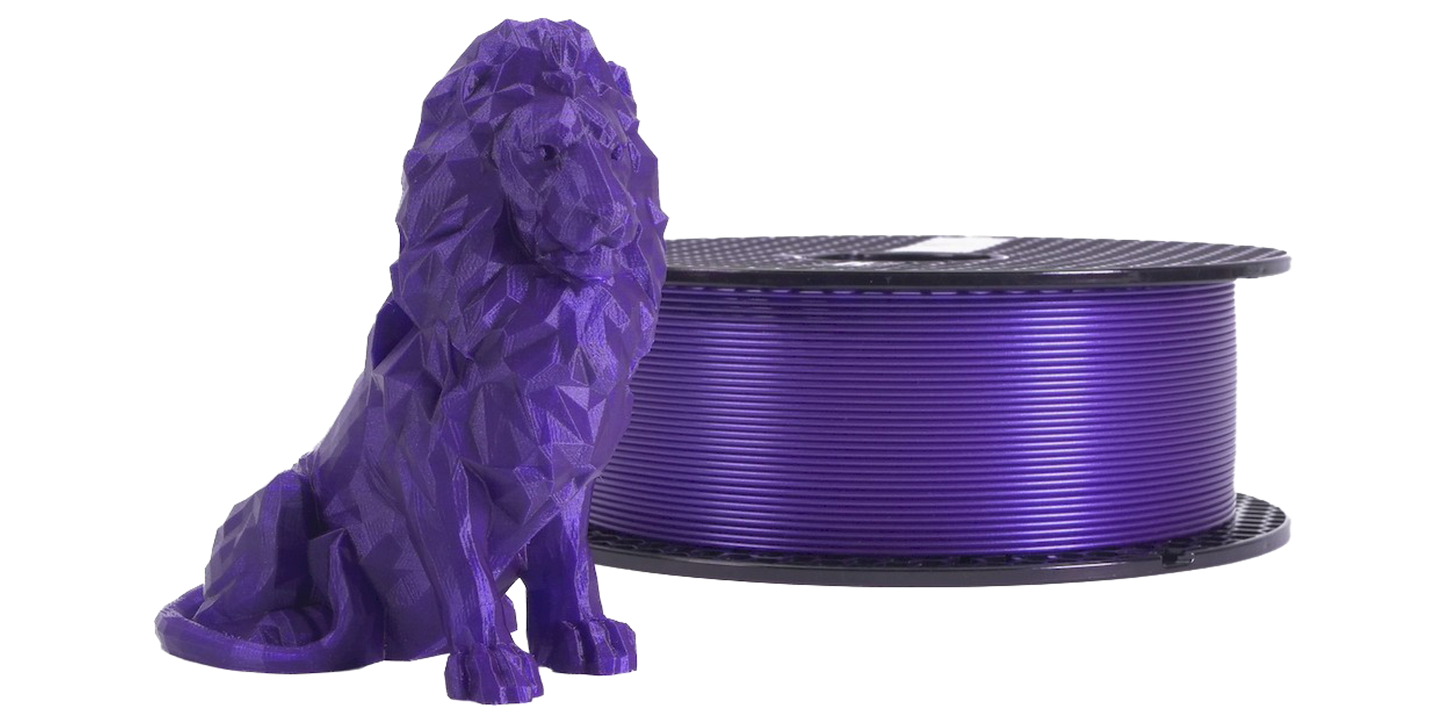
Prusament PLA Galaxy Purple 1kg
Prusament PLA Galaxy Purple 1kg
Low Stock — 1 left
Popular among both beginners and advanced users
PLA is the easiest-to-print filament we make. It’s reliable and it doesn’t require any print preparations or difficult post-processing methods. If you’re new to 3D printing, it’s best to start with PLA before using other materials.
Sanding
When post-processing PLA, it’s better to use wet sanding. Without water you’ll quickly start heating the plastic by friction, it will melt locally and deform. Also, without water, the sanding material would clog easily.
Gluing
PLA can be glued with many types of glue. We recommend using superglue for most of the parts. Certain PLA filaments may be also glued using acetone, however, it strongly depends on the various additives and colors used.
Notes
This PLA is made in-house by Prusa Research.
1.75 mm filament is manufactured with precision of ± 0.02 mm (±0.03 for blends)
Before printing, make sure the surface of the heatbed is clean as described in the 3D Printing Handbook.
Examples of enclosed printers: Bambu X1C / P1S, Prusa CORE One, Voron 2.4 / Trident, Qidi X-Plus, anything with sealed doors and a hot chamber.
Examples of open printers: Bambu A1 / A1 mini, Prusa MK4 / MINI, Ender 3, most bedslingers. These are fine for PLA / PETG / TPU / PVA but struggle with materials marked “Required” on this row — ABS, ASA, PC, Nylon and similar will warp or delaminate without a hot chamber.
* Depends on your dryer. If you’ve got a strong dryer (Sunlu S2/S4, PrintDry Pro, Eibos, etc.) 55 °C max is plenty. If your dryer is a weak boi (basic food dehydrator, cheap clip-on, fan-only) push it to 70 °C to actually move moisture out.